
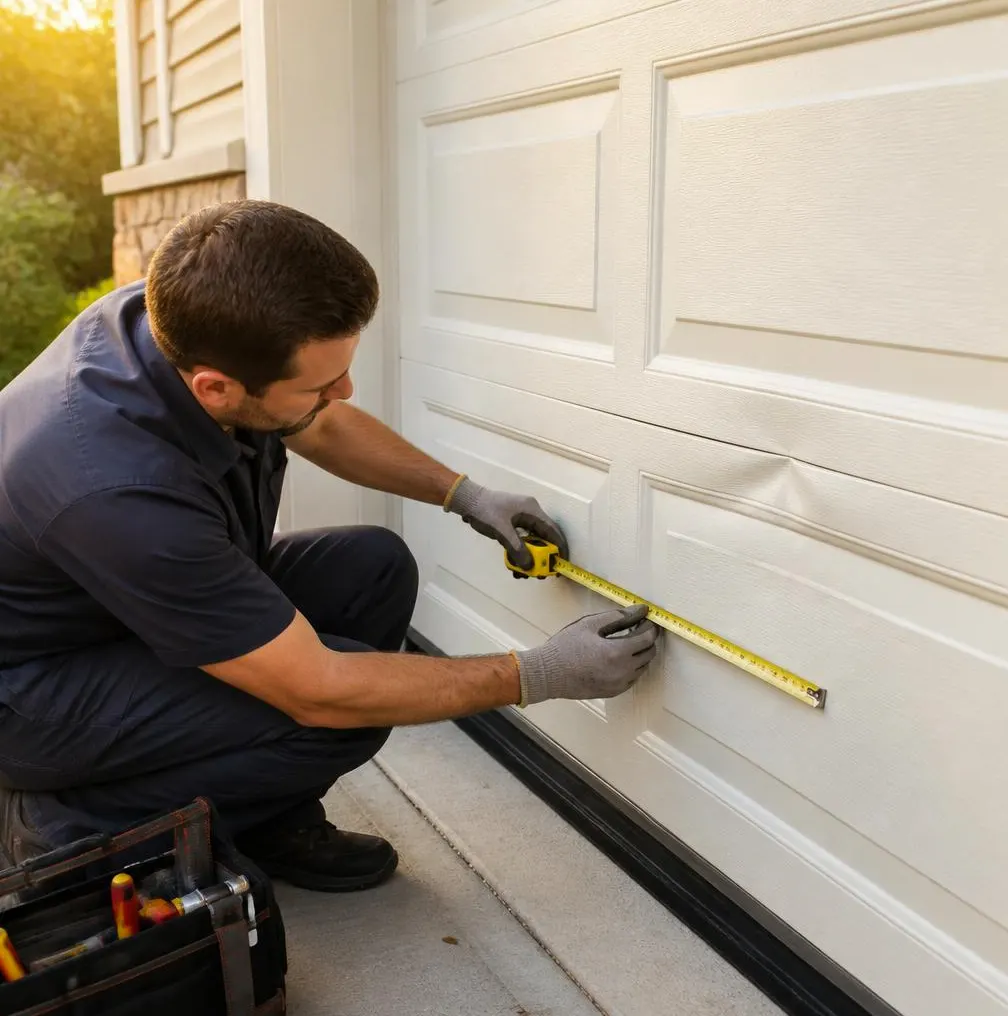
Skip this maintenance one more season and you're choosing between two bad outcomes: a garage door that won't close at all, left open all night while winter rain blows in and soaks whatever is stored near the opening, or a door that closes anyway because someone taped over the safety sensors to make the "blinking light" problem go away. The first costs you a wet garage and an open invitation to raccoons and spiders. The second can close a two-hundred-pound door on a car bumper, a bike, or worse. Neither is acceptable, and both are preventable with about ten minutes of attention.
What the Photo Eyes Actually Do
Every garage door built since the mid-1990s has two small sensors mounted a few inches off the garage floor, one on each side of the track. They shoot an invisible infrared beam across the opening. If the beam is broken while the door is closing, the opener reverses the door instead of letting it keep going. That's the entire safety system standing between a closing door and anything, or anyone, in its path.
When people say their garage door "won't close" or "closes partway then goes back up," the photo eyes are the first thing to check. When people say their door closes fine even though a sensor looks damaged or disconnected, that's actually the more dangerous situation, because it usually means the safety reversal has been bypassed.
Why They Trip, Especially Right Now
A few local, seasonal culprits show up over and over:
- Dust and smoke film from the dry season. Months of dry weather and periodic wildfire smoke leave a fine haze on the sensor lenses. You often can't see it by eye, but it's enough to weaken the beam.
- Spiders moving indoors for winter. As it cools off, garages become popular real estate for spiders, and a single web strand across a lens can scatter the beam just enough to cause random reversals.
- Condensation and water droplets. With winter rain starting up, temperature swings between a cold garage and a warmer house can fog or bead moisture on the lenses, especially right after a storm.
- Bumped or knocked-out-of-alignment brackets. Storage bins, bikes, ladders leaned against the track, even a car bumper tapping the bracket, can nudge a sensor a few degrees off. The beam no longer lines up, even though nothing looks obviously wrong.
- Settling and retrofit work. Homes that have had seismic retrofitting or foundation work can see small shifts in the garage framing over time, which occasionally throws off a track or bracket that was fine for years.
How Badly This Can Go
At the mild end, a dirty or misaligned sensor just makes the door balky, reversing when nothing is there, which is annoying but harmless. At the inconvenient end, the door refuses to close at all, and now your garage sits open overnight through a rainstorm. At the serious end, someone gets frustrated with the false reversals and disables the safety feature entirely, by unplugging a sensor, taping the indicator light so it stays green, or rewiring around it. At that point the door will close no matter what's underneath it. That's the scenario that turns a $20 part into a real injury or a damaged car.
How to Tell Which Situation You're In
- Look at the small LED on each sensor. A steady, solid light on both sides usually means good alignment and a clean connection. A blinking or flickering light means the beam path has a problem.
- Try closing the door and waving a broom handle through the beam path partway down. The door should stop and reverse immediately. If it doesn't, stop using the opener until this is fixed.
- Check if both sensor brackets are pointed at each other in a straight line, roughly four to six inches off the floor. A sensor that's been bumped often tilts slightly up, down, or sideways.
The Fix: Clean, Align, Confirm
- Power down first. Unplug the opener or shut off its breaker before touching wiring.
- Wipe both lenses with a soft, dry microfiber cloth. Avoid household glass cleaner, which can leave a film; a barely damp cloth followed by a dry one works better.
- Clear any webs or debris from the brackets and the area between them.
- Loosen the bracket screws slightly and gently adjust each sensor until the LED on the receiving side goes solid. Small movements matter here, a quarter inch can make the difference.
- Snug the screws back down once both lights are steady, then restore power.
- Test with the broom-handle method described above before trusting the door with anything valuable nearby.
If the lights stay steady for a few cycles and the door reverses properly when the beam is blocked, you're done. If the lights flicker even after cleaning and realignment, the problem is likely a wiring issue, a failing sensor, or a bracket that's been bent, and that's a job for a technician rather than more fiddling.
Why You Should Never Bypass Them
It's possible to physically disconnect or defeat photo-eye sensors so the door closes regardless of what's in the way. Some older openers can even be wired to ignore them. Don't do this, and don't let anyone talk you into it as a quick fix for nuisance reversals. The sensors exist because garage doors are heavy enough to cause real injury, and the handful of minutes it takes to clean and align them is always cheaper than the alternative.
When to Call Precision Garage Door of Los Altos
If you've cleaned and aligned the sensors and the door still reverses randomly, won't close, or the LEDs won't hold steady, it's time for a technician. It's often a cut or corroded wire, a failing sensor unit, or an opener logic board issue that looks like a sensor problem but isn't. Our Garage Door Opener Repair & Installation service covers exactly this kind of diagnosis, and our Preventive Maintenance visits include a full sensor alignment and wiring check so this doesn't become a surprise during the next storm.
If your garage door in Los Altos, CA is giving you trouble with the safety sensors, or it's just been a while since anyone looked at the whole system, give Precision Garage Door of Los Altos a call. We'll get it working safely before the winter rain really sets in.