
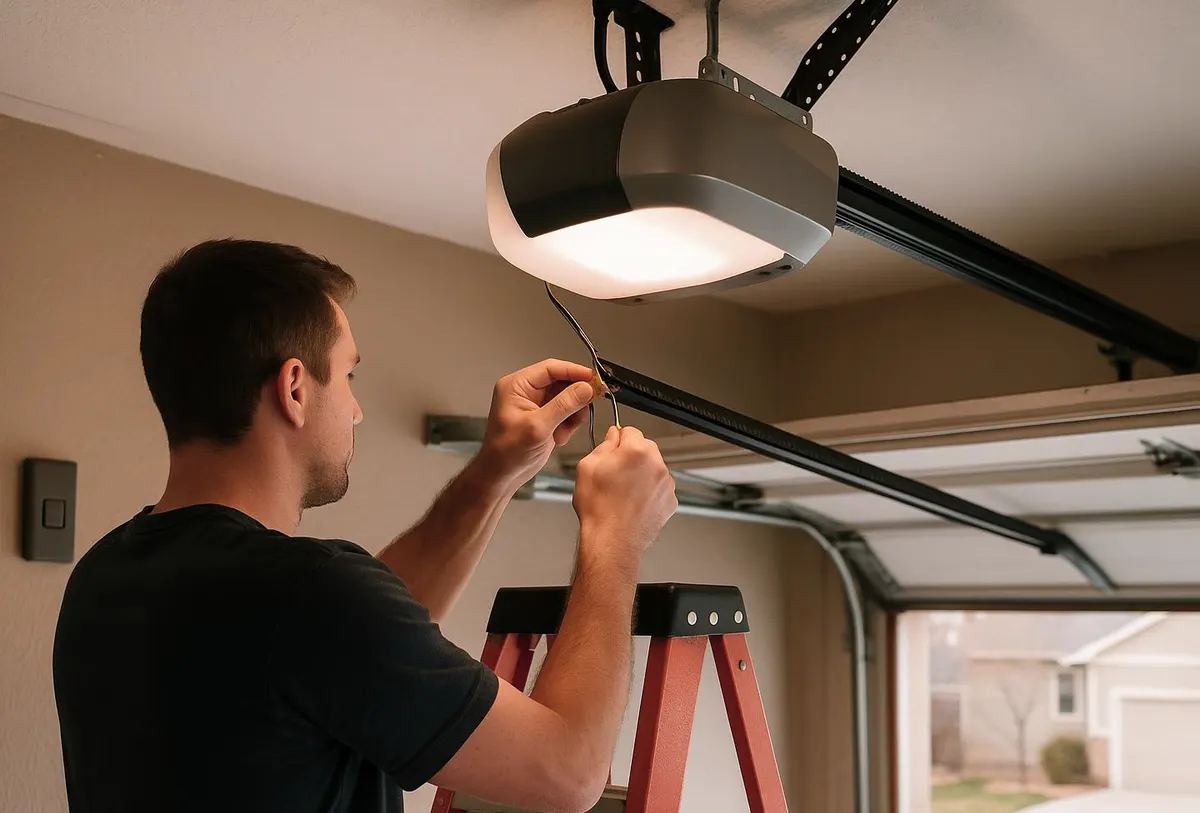
What It Costs You to Wait
A garage door that reverses before it closes, or simply refuses to close, is not a quirky inconvenience you can work around for another few weeks. It's an open invitation: to raccoons and rodents looking for a dry spot before the winter rains start, to the dust and wildfire smoke that settles into garages during our dry months, and to anyone walking by who notices a garage sitting open at 2 a.m. If your garage shares a wall with living space, an open or malfunctioning door also means heat, cold, and moisture moving into the house far more easily than they should. And mechanically, the longer a door fights itself to close, the more strain it puts on the opener motor, the springs, and the track hardware — small problems left alone tend to become full-system failures right when you need the door most, like during a winter storm or when you're loading the car for a trip.
The Symptoms Worth Paying Attention To
- The door starts closing, stops partway, and reverses back up on its own
- The door reverses only when it's almost fully closed, right before touching the floor
- The door won't close at all — you press the button and nothing happens, or it just hums
- The door closes fine some days and not others, with no obvious pattern
- You have to hold the wall button down the entire time to force it closed
Each of these points to a slightly different culprit, but there's a logical order technicians work through to find the answer quickly instead of guessing.
1. Safety Sensors (Check This First)
Nearly every reversal issue starts here. Garage door openers made since the mid-1990s use two photo-eye sensors mounted a few inches off the ground on either side of the track. If the sensors are misaligned, dirty, or one has a loose wire, the opener assumes something is blocking the path and reverses the door — even if nothing is actually there. Dust from our dry season, cobwebs, or a sensor that got bumped by a bike or a stored box are the usual causes. The fix is simple: wipe the lenses, make sure both sensors' indicator lights are solid (not blinking), and realign them so they face each other directly. If a sensor's wiring has been chewed, pinched, or corroded, it needs to be replaced rather than patched.
2. Close-Force and Limit Settings
If the sensors check out, the next stop is the opener's force and limit settings. These tell the motor how far to travel and how much resistance to tolerate before assuming it hit an obstruction. If the limit is set too short, the door reverses just before reaching the floor because the opener thinks it's already closed. If the force setting is too sensitive, normal friction from the rollers or a slightly bent track can trigger a false reversal. Adjusting these is straightforward on most openers through a dial or keypad, but it should be done carefully — a force setting that's too high defeats the safety feature it's meant to provide.
3. Track Alignment and Obstructions
Next, a technician checks the tracks themselves for dents, debris, or sections that have pulled away from the wall. Garage doors in houses that have gone through seismic retrofitting sometimes have slightly altered wall geometry that puts uneven stress on the track over time. A visual pass down both tracks, plus a check of the rollers for wear or binding, usually reveals whether the door is physically struggling to move rather than being stopped electronically.
4. Springs Losing Tension
If the door seems to reverse under strain — groaning, jerking, or struggling partway up or down — worn torsion or extension springs are often the real issue. As springs lose tension, the opener has to work harder to do the spring's job, which trips the force sensor and causes a reversal. This isn't a DIY repair; garage door springs are under heavy tension and require the right tools and experience to replace safely.
5. Opener Logic Board or Motor Issues
If everything mechanical checks out and the door still won't respond consistently, the opener's circuit board or motor may be failing. This is more common in openers over ten years old, and it's worth weighing repair against replacement, especially if you'd also like updated safety features or smartphone control.
When to Call Precision Garage Door of Los Altos
If you've checked the sensors and the door still reverses, stalls, or won't close, it's time for a technician rather than more guesswork. Precision Garage Door of Los Altos handles everything from Garage Door Opener Repair & Installation to Spring Replacement, and we offer Emergency Garage Door Service for doors stuck open overnight or during a storm. We'll diagnose the actual cause on-site, explain what we find in plain terms, and fix it the same visit whenever possible.
Don't head into the rainy season with a garage door you can't trust. Call Precision Garage Door of Los Altos today to get it closing — and staying closed — the right way.