
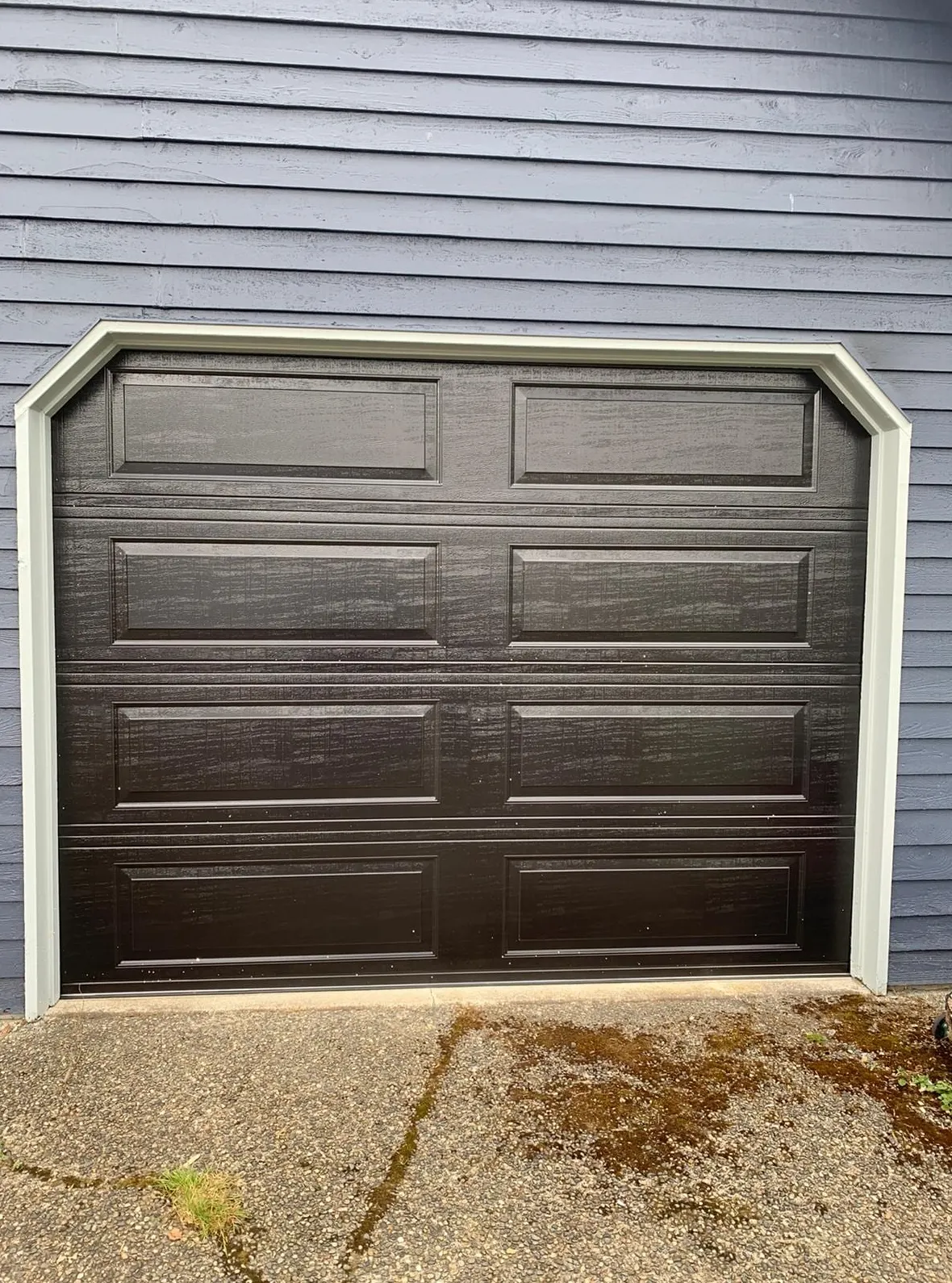
You pull into the driveway on a damp November morning and notice it: the bottom corner of your wood garage door has swollen along the seam, the paint lifting where rainwater pooled all last winter. Or maybe it's the steel door with a dent from a stray soccer ball that never quite popped back out, or the aluminum door that flexes audibly in a gust off the hills. Whatever the trigger, it's the moment you start wondering whether the material your door is made of was ever right for this climate in the first place.
Garage doors in this part of the Peninsula deal with a specific mix of stresses: hot, dry summers with wildfire smoke and dust, a wet winter stretch, temperature swings between inland and coastal pockets, and in many older homes, structural retrofitting that changes how much weight the opener and springs are working against. Material choice affects all of it.
How the five materials actually perform here
Steel
Steel is the default for a reason. A quality steel door, especially one with a polyurethane-insulated core, resists warping in heat, shrugs off winter moisture when properly sealed, and holds paint well through dusty, smoky summers. Its weak point is denting: a bike, a ladder, or a bumper tap will leave a mark that doesn't pop out like aluminum sometimes does. Rust is rare unless the finish is chipped and left exposed through a wet winter.
Wood
Wood still has the best curb appeal of any material, and plenty of older Los Altos homes were built with it in mind. But wood is the most climate-sensitive option on this list. Summer dryness causes shrinking and cracking at the panel seams; winter rain swells the wood back out, and that expand-and-contract cycle is what causes the warping and paint failure you notice first. Wood requires refinishing on a real schedule, not an occasional one, to hold up through both seasons.
Aluminum
Aluminum is light, which sounds like an advantage until you consider what it does in wind and impact: it dents easily and can oil-can (that visible rippling) in direct afternoon sun on west-facing garages. It won't rust, which matters near the bay where salt air travels further inland than people expect, but it's a poor insulator and a poor match for a door that takes daily use.
Fiberglass
Fiberglass resists denting, won't rot, and handles the summer-to-winter swing without warping, making it a genuinely good fit for this climate. The trade-offs are cost and impact resistance in a different sense: fiberglass can crack rather than dent if struck hard, and repairs to a cracked panel are more involved than popping out a steel dent.
Composite / Composite-Overlay
Composite doors, often a wood-fiber or wood-look composite over a steel or engineered core, are built to solve exactly the problem this article opened with: the look of wood without the seasonal swelling and cracking. They hold paint and stain better through wet winters and dry summers alike, and most carry better warranties against warping than solid wood. They cost more than steel but less than true fiberglass in many cases.
The trade-offs, side by side
- Best for dent resistance: fiberglass, then steel
- Best for curb appeal: wood, then composite
- Best for low maintenance through wet winters: steel, fiberglass, composite
- Best for hot, sun-exposed garages: steel (insulated), composite
- Lightest for older openers or retrofitted structures: aluminum, then steel
- Most likely to need refinishing work: wood, by a wide margin
National price ranges for a double-car door, installed, typically run from the low end for basic steel up through the high end for fiberglass or real wood, with composite landing in the middle. Exact quotes depend on insulation level, window options, and hardware.
What fits typical homes here
For most houses in this area, an insulated steel door is still the practical choice: it handles the summer heat and winter rain without special care, resists the dust and smoke that settle on everything in late summer, and is the easiest to repair if something dents it. If the home's architecture calls for a wood look, a composite overlay door gets you that appearance without the seasonal expansion problems a solid wood door will eventually show. Save true wood for homes where the look is non-negotiable and you're committed to a real refinishing schedule, and skip aluminum unless weight on an older opener or track system is the deciding factor.
When to call Precision Garage Door of Los Altos
If you're seeing warping, persistent dents, or a door that's simply fighting the weather every season, it's worth a look before you commit to a replacement material. Our team handles full garage door installation across steel, wood, fiberglass, and composite options, and we'll tell you honestly which material makes sense for your garage's sun exposure and your home's structure. If the door itself is sound but it's just not holding up to the swing between dry summer and wet winter, our preventive maintenance service can extend its life before replacement is the only option.
Call Precision Garage Door of Los Altos to talk through materials and get a straight answer for your garage, your home, and this climate.